Desk cams instead of face cams
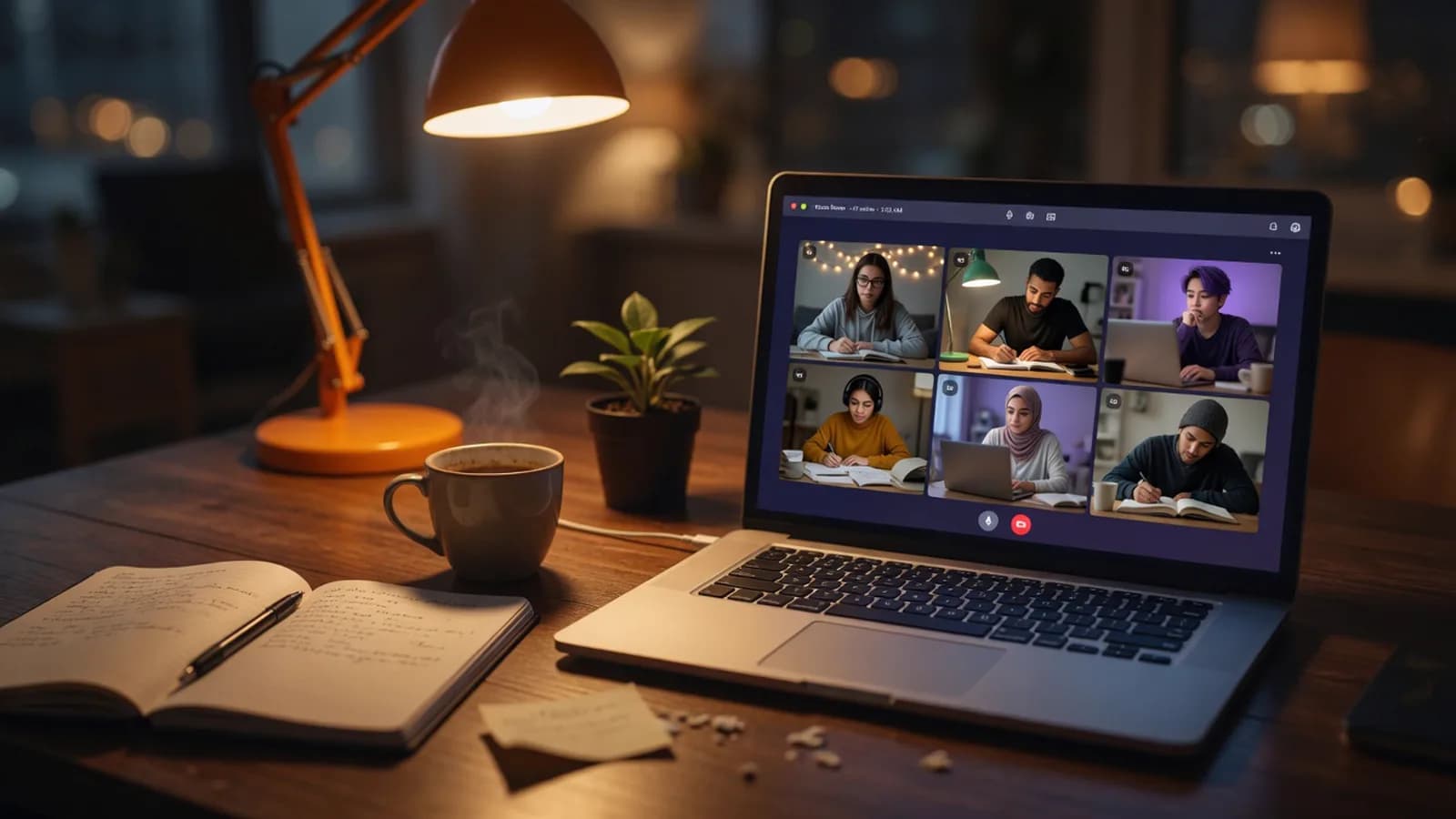
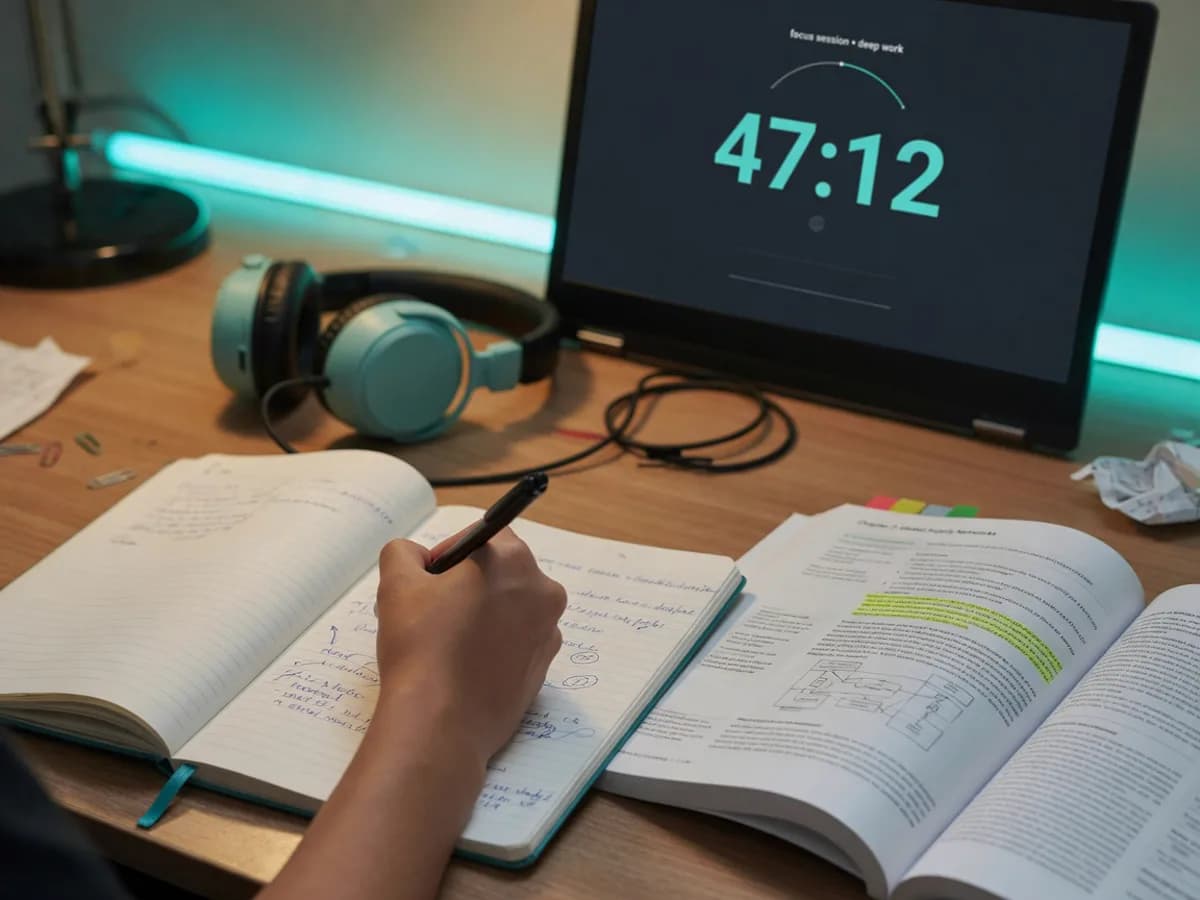
Plenty of people tilt the camera down at a notebook and a hand. Evidence that a person is working without the pressure of being looked at.
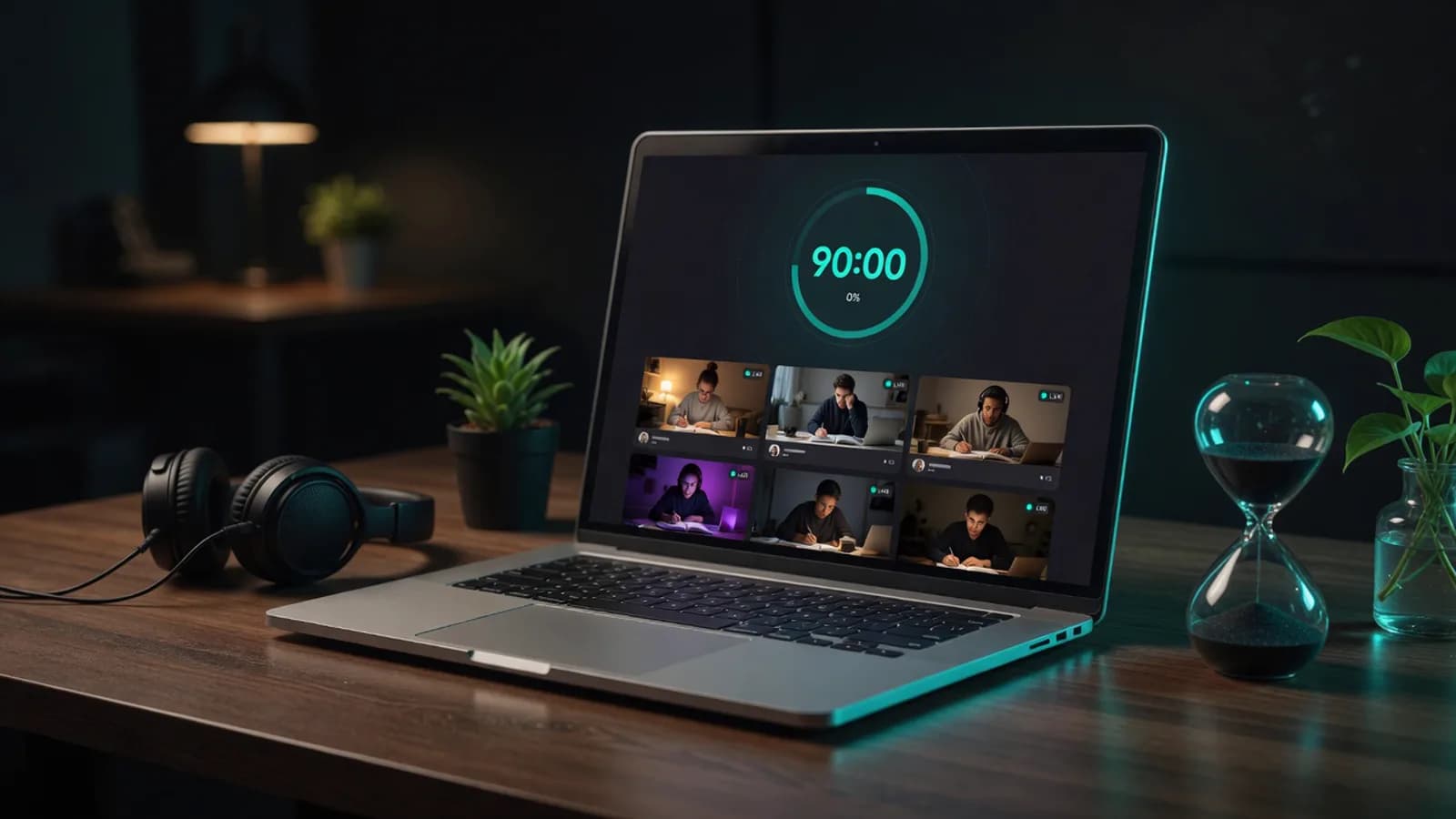
Long blocks, mics off, nobody talking. Just the sound of other people working.
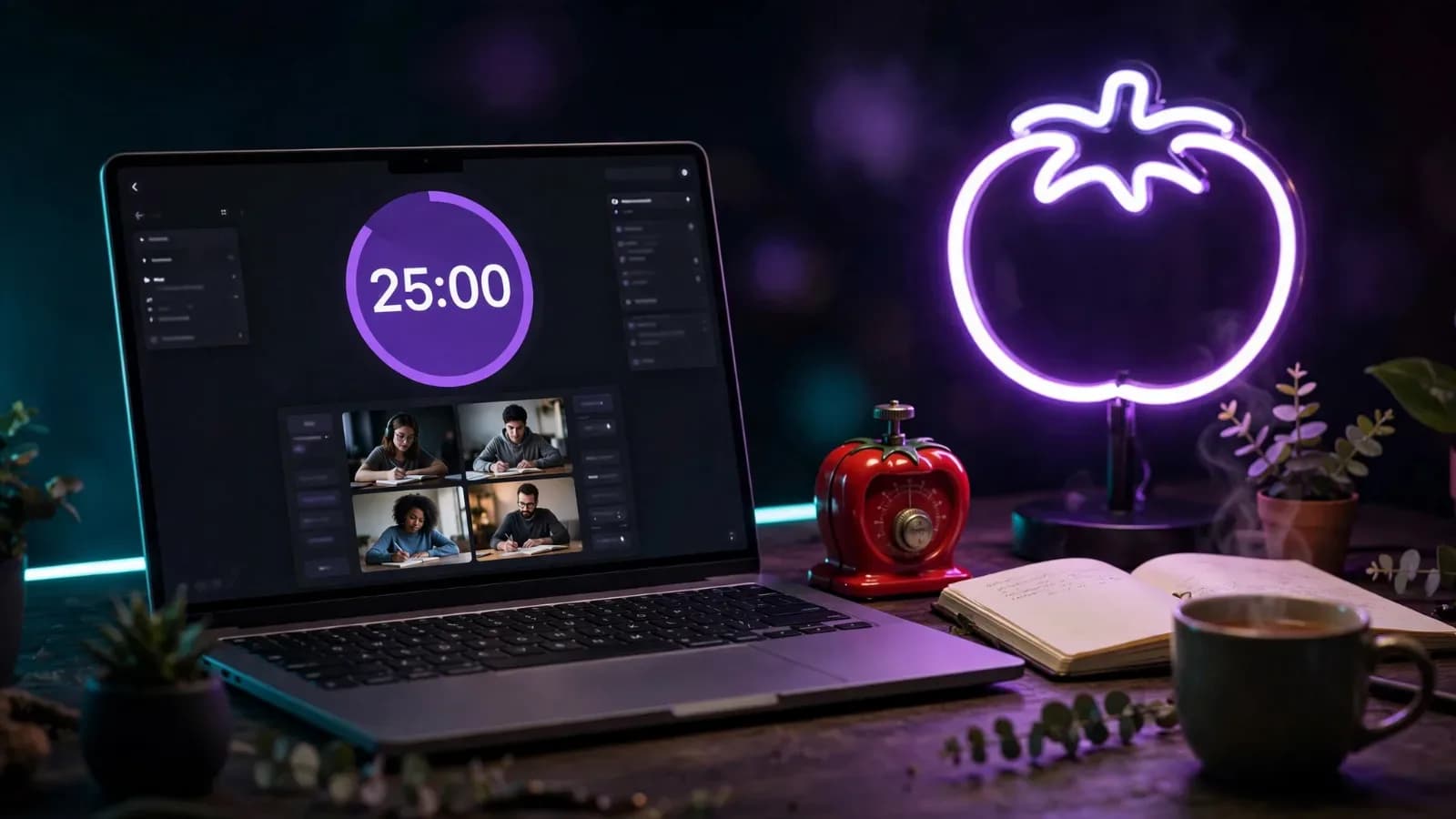
A shared counter runs the block for the whole room. Everyone sees the same number tick down.Illustration generated with AI
01
A focus room online exists for exactly this moment: the fifteen minutes after you sit down when the work still hasn't started.
You sit down at 9:14 with a clear plan. By 9:31 you have read the same paragraph four times, opened a tab you didn't mean to open, and started to suspect the real problem is your chair. The work hasn't got harder. You just never crossed the line into it.
Working alone at home is quiet in the wrong way. Nothing stops you standing up. Nothing notices when you leave for eleven minutes and come back with a sandwich. There's no friction, and friction was the thing holding you in place.
The library fixed this, and then it closed at six, or someone started a phone call three desks away. What actually worked there was never the building. It was a room full of people who had all silently agreed not to interrupt each other, the same idea behind a silent coworking room you can join from any browser. If you want the broader version of that idea first, start with what a virtual study room is.
02
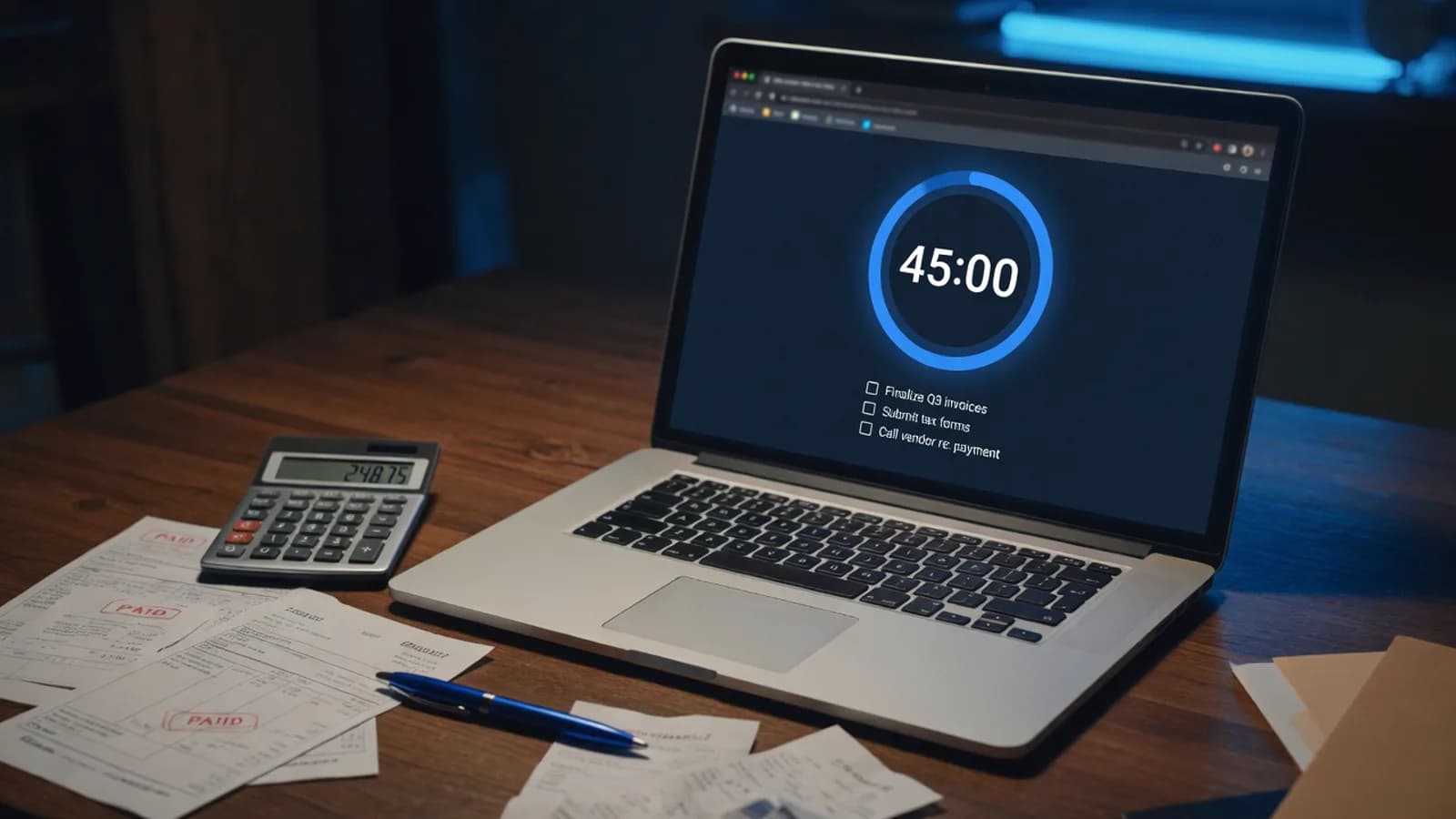
Rooms are grouped by how long the block runs: 50 minutes or a 90 minute focus block. Choose the one that matches the work, not your current confidence.
Your mic is off when you land and stays off unless you change it. Your camera is your call. Most people point it at the desk rather than their face.
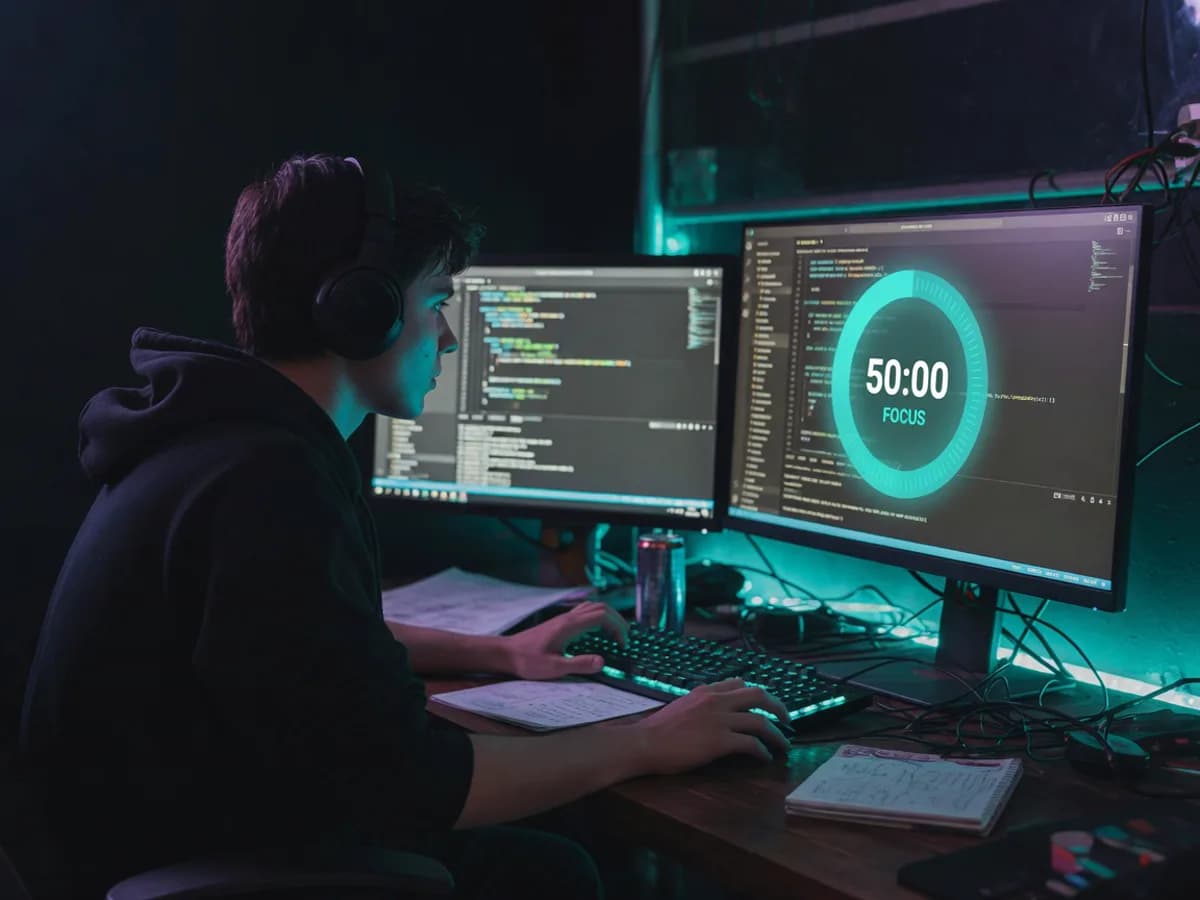
The block counter counts down for everyone at once, the same shared-clock idea behind a synced Pomodoro timer. When it hits zero the room rolls into the next block, and you decide whether to stay.
 AI-generated
03
A 25-minute sprint is a fine tool, and the wrong one for a literature review. Some work needs the long runway of a deep work room: reading a chapter properly, writing the middle section of something, debugging one stubborn thing until it gives up.
So these rooms run long on purpose. The 50-minute block suits reading, problem sets, and editing. The 90-minute block is for writing and building, where the first fifteen minutes are just getting your hands back on the material.
04
 AI-generated
Every person lands muted and the room doesn't ask them to unmute. It's the same principle behind virtual body doubling: working alongside others online without talking to them.
Plenty of people tilt the camera down at a notebook and a hand. Evidence that a person is working without the pressure of being looked at.
Everyone in the room sees the same number. When you glance up and see 38:41 left, so does the person in the top-left square.
Past that it stops feeling like a study hall and starts feeling like a webinar, so a new room opens.
A side panel for links, a question, or 'back in five'. It scrolls slowly, because almost nobody uses it.
05
One enormous document and no external deadline until the one that ends everything.
Good work that happens in one long unbroken stretch, on a calendar that keeps cutting it into pieces.
Accountancy, law, medical boards. Months of material that only moves in long sittings.
People who need to be somewhere that isn't their kitchen, at an hour when nowhere else is open.
06
A focus room online is a shared browser room where a group of people work in silence on their own tasks at the same time. Mics stay off, cameras are optional, and a shared counter runs the block for everyone. The point is social pressure without social contact.
No. You can sit in a room with the camera off for as long as you like. If you want accountability without exposure, point the camera at your desk instead of your face.
Rooms run 50-minute or 90-minute blocks. They roll continuously, so when one finishes the next starts straight away and you can stay for as many as you want.
Yes, free, with no account and no trial that ends. You open the page, pick a room, and you're in.
You can unmute, but the whole social contract of these rooms is that you don't. Use the text panel if you need to say something. If you want a room where people talk between blocks, online productivity sessions are the better fit.
Usually somewhere between four and twenty, and never more than 30. The room list shows live headcounts before you join, so you can pick a busy room or a nearly empty one.
Close the tab. Nothing is logged, nobody is notified, and the room carries on without you. Come back in the next block and take any free square.
Pick 50 or 90 minutes, mute, and start before you talk yourself out of it.
Join a quiet roomAlso used by teachers & remote teams. Sync YouTube without screen sharing — every viewer loads full quality from YouTube's CDN directly.
How it works